

Rekindling the Light: The Ultimate Yule Gift Guide
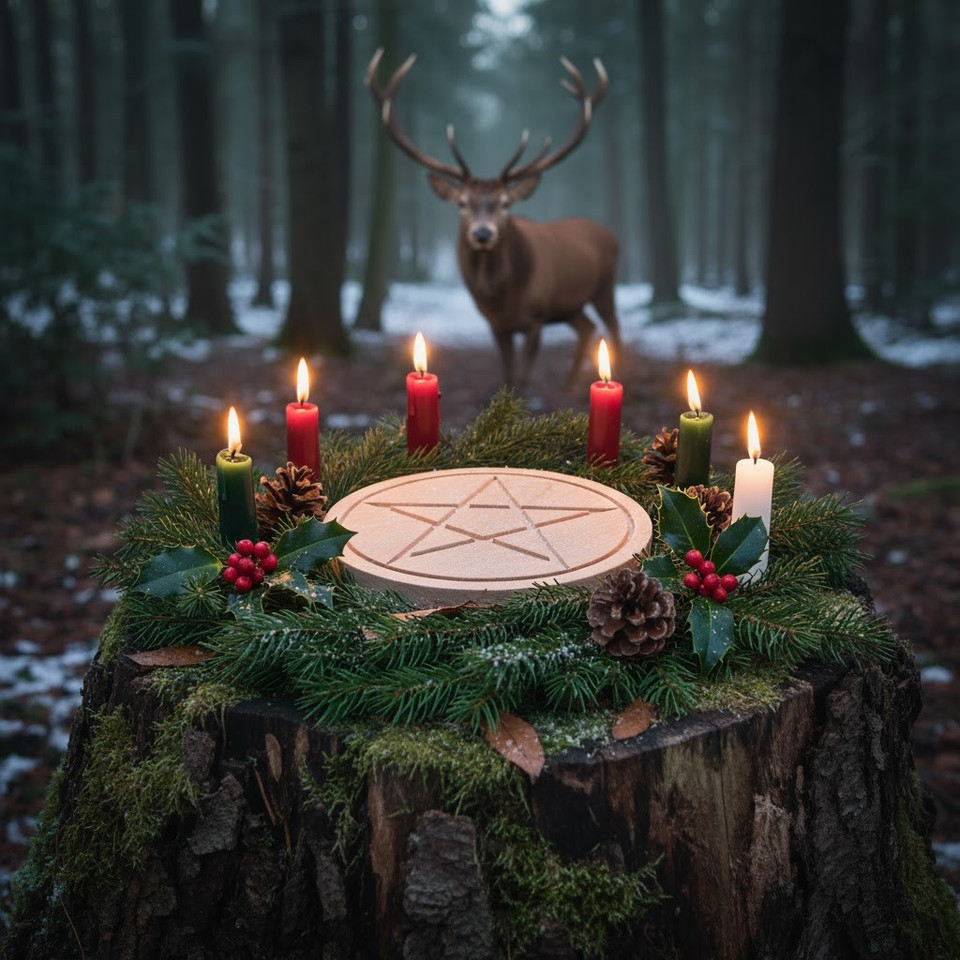
Rekindling the Light: The Ultimate Guide to Magickal Yule Gifts
The Longest Night and the Promise of Dawn
As the great Wheel of the Year turns to its darkest point, we arrive at Yule. Celebrated from December 20th to the 23rd, the Winter Solstice on December 21st 2025 marks the longest, most profound night of the year—a sacred pause in the rhythm of the earth. This is a liminal time, a threshold of quiet introspection and deep reflection, when the world is hushed beneath a blanket of snow and stars. Its origins are ancient, rooted in the traditions of the Germanic and Norse peoples. For them, it was a raucous time of feasting, of roaring hearth fires, of honoring the Pagan Gods and the turning of the wheel of the year.
At its heart, Yule is the celebration of a promise: the rebirth of the sun. Though we stand in the deepest dark, this is the moment the light begins its slow, triumphant return. From this night forward, the days will begin to lengthen, bringing with them the hope of warmth, growth, and renewal. The modern practice of giving gifts at this time is more than a simple exchange of material goods; it is a continuation of these ancient customs of sharing abundance, of strengthening the bonds of community, and of offering meaningful, magickal tokens to bring light and warmth through the coldest season.
Many of the traditions we associate with the mainstream holiday season—the decorated evergreen tree, the Yule log, wreaths of holly, and even the bearded, gift-giving figure who rides through the sky—have their deepest roots in these pre-Christian Pagan customs. The Norse god Odin, known as Jólnir or 'the Yule one', was a sky-riding gift-bringer long before the figure of Santa Claus took shape. For centuries, these powerful, nature-based traditions were absorbed and overlaid by new religions, and merged the celebrations of Yule and Christmas.
Today, for modern Pagans and Wiccans, celebrating Yule is a conscious and powerful act of reclamation. It is a deliberate choice to de-syncretize these traditions, to peel back the layers of history and reconnect with the original, potent magic of the earth's cycles. To celebrate Yule is to find spiritual meaning in the cosmos, to honor the natural world, and to participate in a beautiful act of spiritual rediscovery. This guide to magickal Yule gifts is an invitation to join in that reclamation, to find or give a tool that will help a beloved practitioner connect more deeply with the profound and beautiful meaning of the longest night.
The Heart of the Hearth: Our Top 10 Gifts for a Magickal Yule
1. Wheel of the Year Necklace: Wearing the Sacred Cycle
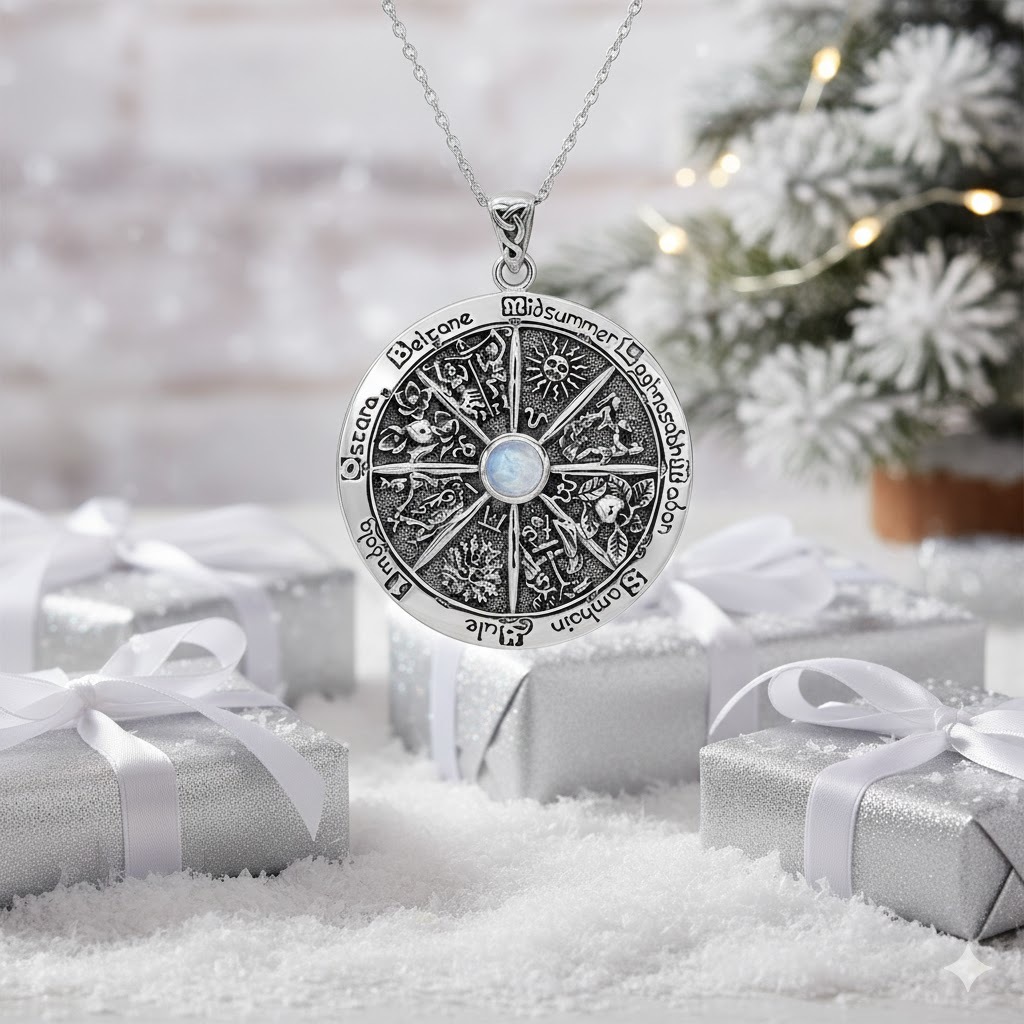
The Wheel of the Year is the sacred calendar for many modern Pagans and Wiccans. It is a beautiful and elegant system that marks the turning of the seasons through eight sacred days, known as Sabbats. These festivals are divided into two groups: the four "lesser Sabbats" or quarter-days, which are the solar festivals of the Solstices and Equinoxes, and the four "greater Sabbats" or cross-quarter days, which fall at the midpoints between them. Yule, as the Winter Solstice, is one of these foundational quarter-days, marking the symbolic rebirth of the Sun God at the hands of the Great Mother Goddess.
A Wheel of the Year necklace is far more than a piece of jewelry; it is a personal talisman that allows the wearer to carry a constant, tangible reminder of this sacred, cyclical worldview. It is an emblem of the eternal pattern of life, death, and rebirth that governs all of existence. To wear it is to consciously align one's personal energy with the great, breathing rhythms of the earth, acknowledging that our own lives mirror the seasons with periods of growth, abundance, decline, and rest.
The Wheel of the Years components are rooted in ancient agricultural and solar festivals, brilliantly weaving together the solar festivals of Germanic traditions with the fire festivals of the Celtic calendar. This means the Wheel is a powerful piece of living spiritual technology, first layed out by the pioneers of the craft to provide a cohesive and unifying framework for our nature-based spirituality.
Therefore, gifting or wearing a Wheel of the Year necklace is a profound statement of identity and belonging within this vibrant spiritual community. It signifies an adherence to a worldview that finds the divine not in a distant heaven, but in the turning of the seasons and the sacredness of the Earth. It is an emblem of a spiritual path shared by Wiccans, Druids, and Pagans of many traditions. The gift of this peice of Pagan jewelry, is the gift of a map—a map of the sacred year, and a symbol of one's place within a thriving spiritual community.
2. Lord and Lady Altar Statue Gift Set: Honoring the Divine
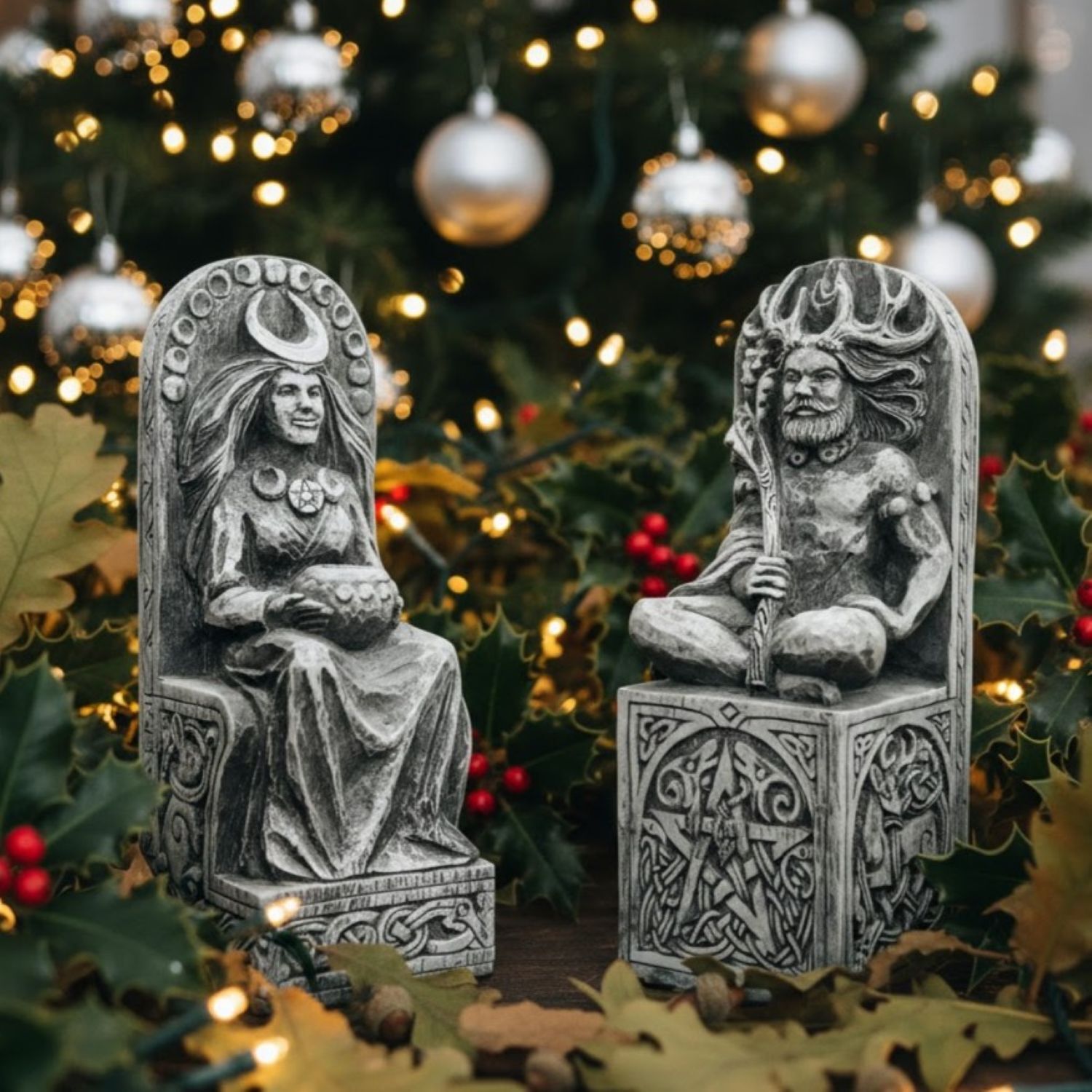
Central to many Wiccan traditions is the belief in two main deities: a God and a Goddess. They are not a hierarchical pair, but are seen as equal, opposite, and complementary divine forces. An altar statue set of the Lord and Lady provides a sacred focal point for ritual, allowing a practitioner to connect directly with these powerful archetypes.
At Yule, these statues take on a particularly poignant significance, for they represent the central myth of the Sabbat. The story tells that the Goddess, who at Samhain entered her Crone phase as the God died, now transforms into her Mother aspect. On the longest night of the year, she gives birth to the infant God, who is the Sun, reborn and full of promise. He is the Oak King, the child of promise who will grow in strength as the days lengthen. Placing these statues upon a Yule altar is a way to honor this sacred story, to meditate upon the divine cycle of death and rebirth, and to invite the energies of the divine masculine and feminine into one's sacred space as they manifest at this crucial turn of the Wheel.
This Yule myth reveals a profound concept that divinity is not a static, transcendent, or unchanging force that exists outside of our world. Instead, the divine is immanent—it is in and of the world; in a very real sense, the God and Goddess can be seen as Nature. One narrative of the Wheel of the Year follows their life cycles just as it follows the seasons. The God is born at Yule, grows to maturity at Ostara, unites with the Goddess at Beltane, reigns in his full power at Litha, begins to wane at Lughnasadh, and finally dies at Samhain, only to be reborn again.
This vision of the divine is radically different from the concept of an eternal, unchanging deity. It presents a divinity that experiences the full spectrum of existence: birth, vulnerability, growth, love, power, decline, and death. By placing statues of the Lord and Lady on a Yule altar, a practitioner is engaging with a concept that sanctifies the entirety of life's journey. It makes the divine relatable, a mirror for our own experiences of endings and new beginnings. Gifting this set provides the tools to connect with the deep, comforting, and powerful message of the Winter Solstice: that even the divine must pass through darkness to be reborn, and that every ending holds the seed of a new beginning.
3. Winter Solstice Witches' Yule Ornaments (Handmade with Natural Pinecones): The Enduring Life of the Forest
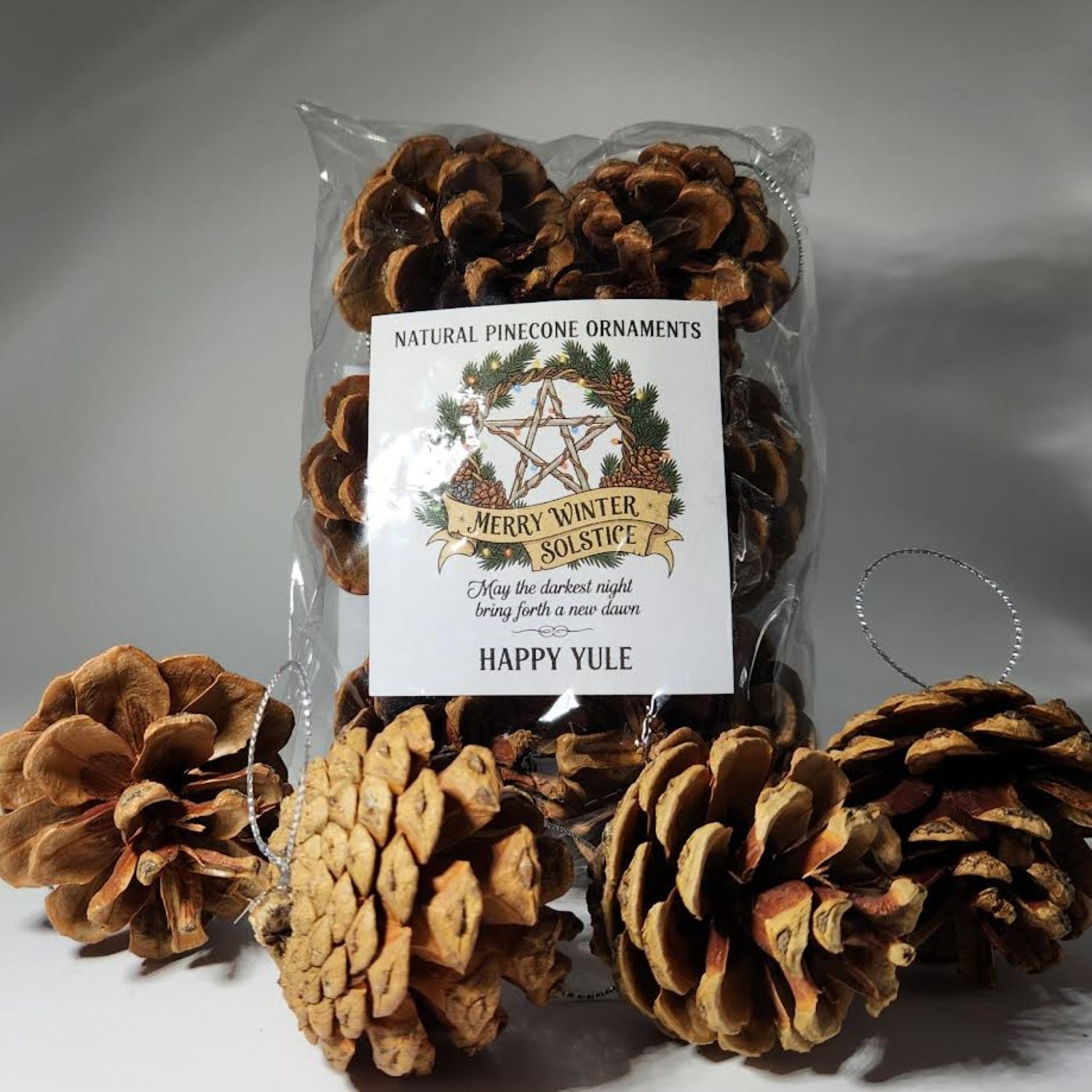
The tradition of bringing an evergreen tree into the home and decorating it for Yule is one of the most visible Pagan customs that has survived in modern holiday celebrations. For ancient Pagans, the evergreen tree was a powerful symbol of the Tree of Life or the World Tree, such as the great ash tree Yggdrasil in Norse cosmology. In the bleakness of winter, when deciduous trees stood like skeletons against the grey sky, the evergreen's ability to retain its life and color was a potent symbol of resilience, perseverance, and the promise of eternal life. These handmade pinecone ornaments connect directly to this ancient practice, bringing the raw, untamed magic of the forest into the sacred space of the home.
The pinecone itself is a particularly powerful and ancient symbol, revered across cultures for millennia. Its significance is multi-layered, making it a perfect emblem for the Yule season.
-
Renewal and Eternal Life: As the fruit of the evergreen pine, it carries the tree's symbolism of immortality. More importantly, its tightly packed scales protect the seeds of the next generation, making it a vessel of potential and the continuation of life.
-
Spiritual Enlightenment: The scales of a pinecone fan out in a perfect spiral that follows the Fibonacci sequence, a pattern of sacred geometry found throughout the natural world. This divine blueprint has led many cultures to associate the pinecone with spiritual awakening. Its shape is strikingly similar to the human pineal gland, the organ nestled in the center of the brain that is often called the "third eye" and is linked to intuition, spiritual consciousness, and enlightenment.
-
A Traditional Yule Tool: In a beautiful folk tradition, small pieces of paper bearing wishes, hopes, and intentions for the coming year can be tucked between the scales of a pinecone. When the pinecone is then placed in the Yule fire, the wishes are released to the universe on the smoke.
36
Beyond this rich symbolism, the pinecone embodies the magic of the Winter Solstice through its very biology. It is a hydro-sensitive and light-sensitive object; on damp, dark, or cold days, its scales remain tightly closed to protect the precious seeds within. On dry, sunny, and warm days, the scales open up, allowing the wind to carry the seeds to fertile new ground. This physical behavior is a perfect, natural metaphor for the spiritual process of Yule. The pinecone remains "closed" and protective through the darkness of the year, holding the sacred potential for new life. At the promise of the sun's return, it "opens" to release that potential into the world. Therefore, a pinecone ornament is not merely a rustic decoration. It is a powerful natural talisman that perfectly encapsulates the entire magical journey of the Sabbat: protecting our hopes and dreams through the darkness, and preparing to release them into the light.
4. Yule Spell Candle Gift Set: Illuminating the Path for the Sun's Return
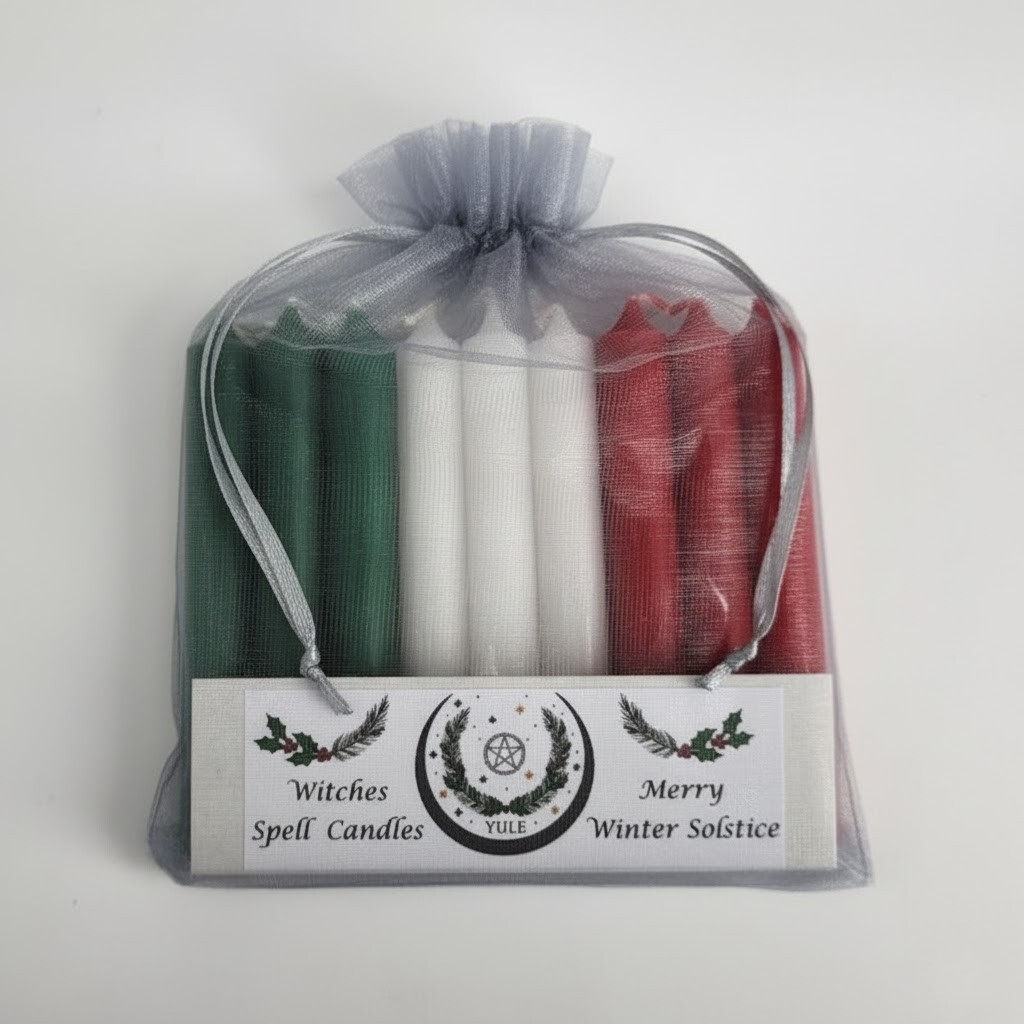
At the very core of Yule is the element of fire and the symbolism of light. Ancient peoples, gathered in the heart of winter, would light great bonfires, keep their hearths blazing, and burn a sacred Yule Log not just for warmth, but as a magical act to combat the overwhelming darkness of the solstice and to symbolically beckon the sun to return.
-
Green: This candle embodies the enduring life force of the evergreens, which remain vibrant against the snow. It symbolizes the waxing Oak King, the god of the growing year who defeats his brother, the Holly King, at Yule. It is the color of intentions for growth, healing, and earthly abundance.
-
Red: This potent color represents the waning Holly King, the god of the dark half of the year who now relinquishes his reign. It also symbolizes the lifeblood of the Goddess as she gives birth, and it carries the energies of passion, courage, strength, and survival.
-
White: White holds the energy of the snow-covered landscape—a symbol of purity, peace, and the clean slate of a new beginning. It is a color of consecration and can be used as a universal substitute for any other color in a ritual.
The act of lighting these candles during a Yule ritual transcends mere symbolism; it is a profound form of sympathetic magic. The practitioner is not a passive observer of the season but an active participant in the cosmic drama of the solstice. Ancient traditions describe lighting fires to actively "drive away spirits of darkness and welcomed the coming light," implying a participatory role in this celestial event. In candle magic, the physical object—the wax, the wick, the color, the flame—serves as a focal point to concentrate and direct one's intention. By lighting a red candle on the altar, the practitioner uses the microcosm of the tiny flame to mirror and encourage the macrocosmic return of the sun's great fire. Some traditions even enact this process over several nights, lighting candles sequentially to represent the steady, growing light that follows the solstice. Gifting this candle set, therefore, is providing a powerful tool for personal empowerment. The recipient can perform a ritual that aligns their own hopes for renewal, their own desire to overcome personal "inner darkness," with the grand, inexorable, and powerful cycle of the Earth itself. It is a gift that facilitates a direct, tangible, and magical experience of the Sabbat's deepest meaning.
5. Spell Locket with Amethyst: A Talisman for Winter's Wisdom
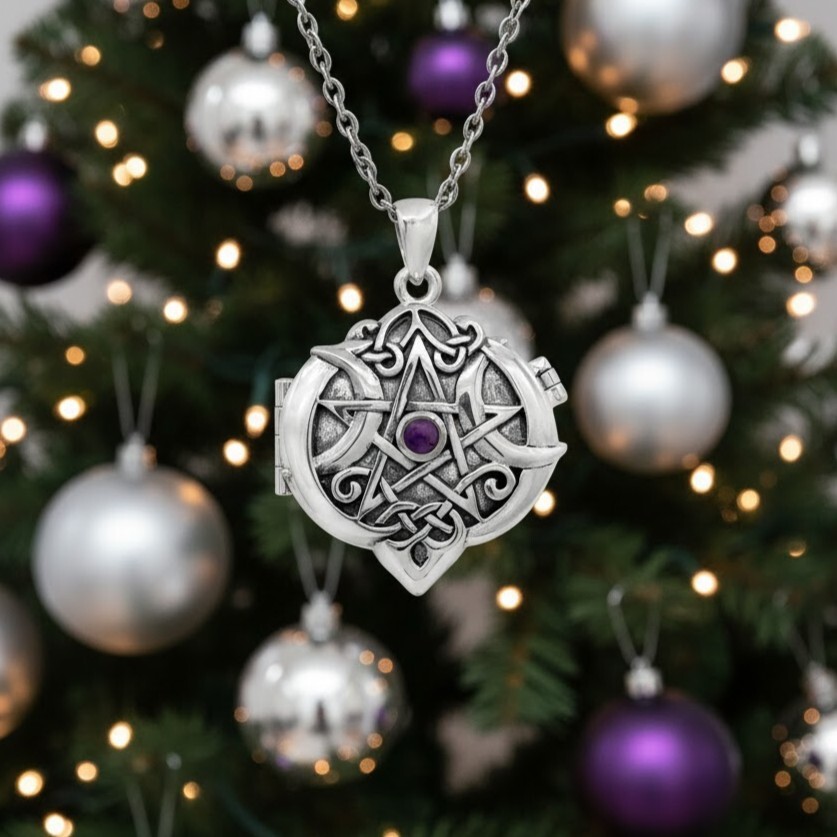
A spell locket is a beautiful and discreet form of wearable magic. It is a small, personal vessel designed to carry spell components—a pinch of protective herbs, salts, a few drops of anointing oil on a piece of cotton, or a tiny sigil drawn on paper—keeping a magical intention close to the wearer's body and within their auric field throughout the day. For the Yule season, there is no more fitting gemstone to adorn such a locket than Amethyst. Its properties align perfectly with the deep, introspective, and spiritual nature of the longest night.
-
Spiritual Connection and Intuition: Amethyst is renowned for its ability to stimulate the Third Eye and Crown Chakras. This enhances intuition, psychic perception, and the ability to receive spiritual wisdom, making it an ideal companion for the introspective and divinatory work often undertaken at the Solstice.
-
Calmness and Clarity: It is a stone of profound peace, known to soothe stress, ease anxiety, and quiet a chaotic mind. This quality beautifully supports the Yule theme of finding stillness and reflecting on the year that has passed.
-
Spiritual Protection: Amethyst is a powerful protective talisman. It is believed to create a shield of high-frequency spiritual light around the wearer, guarding against negative energy and psychic attack. This is especially valuable during the holidays like Yule, when social interactions with distant loved ones may be triggering and not always feel comfortable.
The very name of this gemstone offers a deeper, more nuanced layer of relevance for the season. "Amethyst" derives from the Greek word amethystos, which means "not intoxicated". The ancient Greeks believed the stone could help keep the mind clear. The modern holiday season can often be a period of intense social pressure, emotional turmoil, and overindulgence that distracts from its spiritual core.
In this context, wearing an Amethyst spell locket during Yule becomes a potent magical act of self-preservation. It is a charm to maintain one's spiritual "sobriety" amidst the potential chaos of the season. It helps the wearer to remain clear-headed and focused on the true, sacred meaning of the solstice—inner peace, connection to the divine, quiet wisdom, and personal renewal—rather than becoming lost in the mundane frenzy. It is a talisman for navigating the holidays with grace and a centered spirit.
6. The Complete Apothecary: A Starter Kit of Botanical Yule Magic
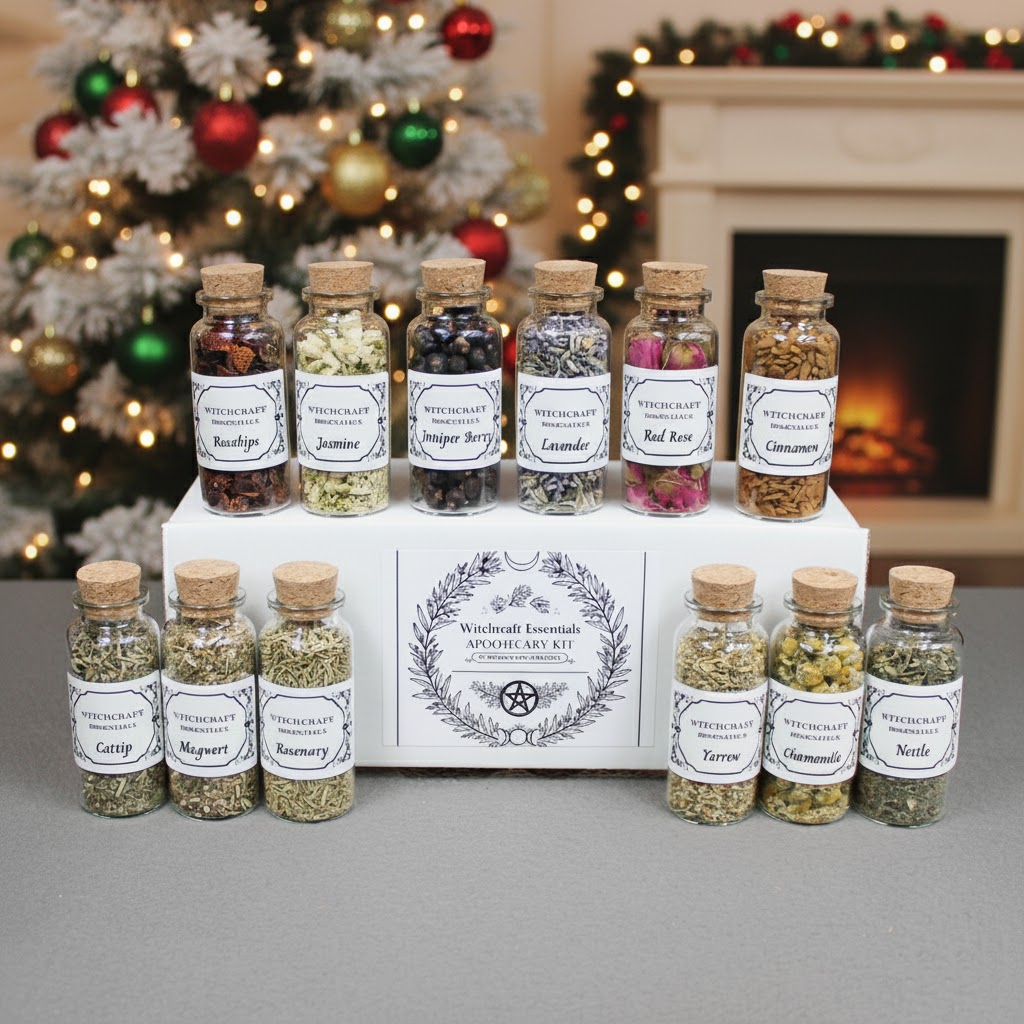
Herbs are the foundation of a witch's craft. They are the bones of the earth, each carrying a unique energetic signature that can be called upon for spells, rituals, incense, anointing oils, and offerings. An apothecary starter kit is an invaluable gift, providing a comprehensive toolkit of botanical magic that can serve a practitioner not just for Yule, but throughout the entire turning of the Wheel. This collection of twelve unique botanicals offers a versatile palette for a wide range of magical workings, with each herb holding a special correspondence to the energies of the Winter Solstice.
| Herb | Key Magical Properties | Yule Correspondence & Ritual Use |
| LAVENDER |
Love, Protection, Purification, Peace, Sleep, Healing |
Sprinkle in a Yule ritual bath for deep peace and purification before the new year begins. |
| ROSE |
Love, Healing, Divination, Protection, Psychic Abilities |
Offer dried petals on the altar to the Goddess in gratitude for the birth of the Sun God. |
| ROSEMARY |
Protection, Remembrance, Cleansing, Mental Clarity, Healing |
Burn as a sacred incense to cleanse the home and remembering loved ones during the long night. |
| ROSEHIPS |
Love, Luck, Healing, Prosperity, Growth |
Add to prosperity charms for the new year, as their seeds represent immense potential. |
| MUGWORT |
Psychic Ability, Divination, Protection, Prophetic Dreams |
Place in a dream pillow on Solstice night to invite prophetic dreams about the year ahead. |
| NETTLE |
Protection, Banishing, Healing, Courage, Purification |
Steep in water for a floor wash to energetically cleanse the home of the old year's negativity. |
| JASMINE |
Love, Prophetic Dreams, Prosperity, Spirituality, Confidence |
Use to anoint a green candle to attract abundance in the coming cycle. |
| JUNIPER BERRY |
Protection, Purification, Health, Spirit Communication, Banishment |
Weave berries into a Yule wreath for the front door to protect the home from unwanted energies. |
| CHAMOMILE |
Money, Luck, Peace, Protection, Purification, Meditation |
Simmer on the stove to quiet the mind for Solstice meditation and deep introspection. |
| CINNAMON |
Prosperity, Success, Love, Lust, Healing, Spell Amplifier |
Sprinkle on a Yule log or into a fireplace to add fiery energy and speed the manifestation of goals. |
| CATNIP |
Love, Friendship, Happiness, Protection, Beauty |
Include in sachets given to friends at Yule gatherings to strengthen bonds of fellowship. |
| YARROW |
Courage, Love, Protection, Divination, Dispels Negativity |
Carry as a personal amulet for courage and psychic protection through the dark half of the year. |
7. Altar of Abundance - Ritual Salts (Green, White, Black): Cleansing the Old, Blessing the New
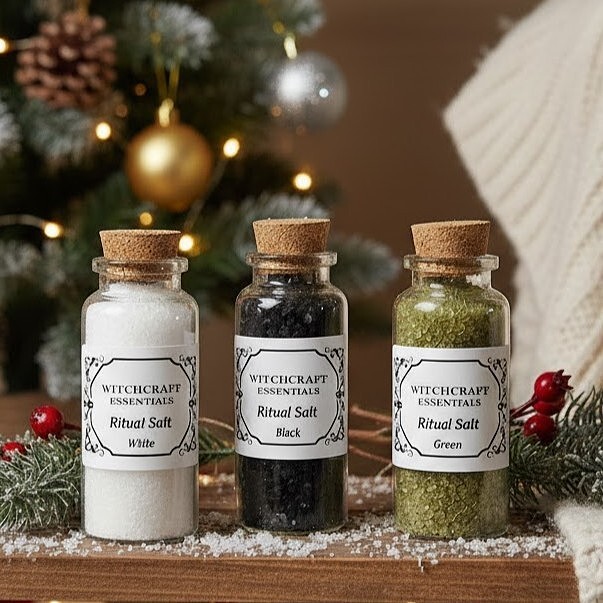
Salt is one of the most ancient and fundamental tools in magic. As a sacred mineral born of the Earth and Sea, it is a powerful agent of the Earth element, used across countless traditions for purification, consecration, protection, and grounding. A ritual salt set containing white, black, and green salt is a complete and potent toolkit for navigating the profound energetic shift of the Winter Solstice.
-
White Salt: This is salt in its purest form, embodying the energies of cleansing, purification, and consecration. In ritual, it is used to cast a protective circle, to cleanse magical tools and crystals, or to bless an altar space, preparing it for sacred work. At Yule, it creates a clean, hallowed ground for the rites that welcome the new light.
-
Black Salt: Witches' Black Salt is a powerful tool for protection, banishing, and absorbing negative energy. It is traditionally made not for consumption, but by blending salt with the ashes. Its purpose is to repel and remove unwanted influences. At Yule, it is the perfect ingredient for a ritual to banish the hardships, sorrows, and stagnant energies of the year that is ending, clearing the way for a fresh start.
-
Green Salt: While less traditional, green ritual salt is a powerful modern innovation based on the principles of color magic. The color green is universally associated with the Earth, growth, fertility, luck, and prosperity. Therefore, green salt is a tool for attraction and manifestation. At Yule, after the old has been banished and the space purified, green salt is used to set intentions and draw in blessings for the new year: financial abundance, personal growth, creative success, and a bountiful spiritual "harvest" in the seasons to come.
Yule is a liminal time, a powerful threshold between the dying year and the one waiting to be born, between the deepest dark and the returning light. Rituals performed at such a turning point are most effective when they honor this transition. This gift set is not merely three different kinds of salt; it is a pre-packaged, sequential ritual that perfectly mirrors the spiritual journey of Yule. The practitioner can perform a potent three-step rite:
-
Release: First, use the Black Salt to banish the past. Sprinkle it at the threshold of the home and sweep it out, or cast it into a fire, visualizing all the negativity of the last twelve months being carried away.
-
Purify: Second, use the White Salt to purify the present moment. Cast a circle with it, or use it to cleanse the altar, creating a sacred, neutral space, a clean slate.
-
Manifest: Third, use the Green Salt to bless the future. Hold it in your hands while focusing on your hopes and intentions for the new year, then place it in a bowl on your altar or sprinkle it in the corners of your home to attract abundance.
This simple yet profound process provides immense practical value, transforming a product into a guided spiritual experience perfectly attuned to the magic of the season.
8. Stag Pagan God Plaque: Answering the Call of the Horned One
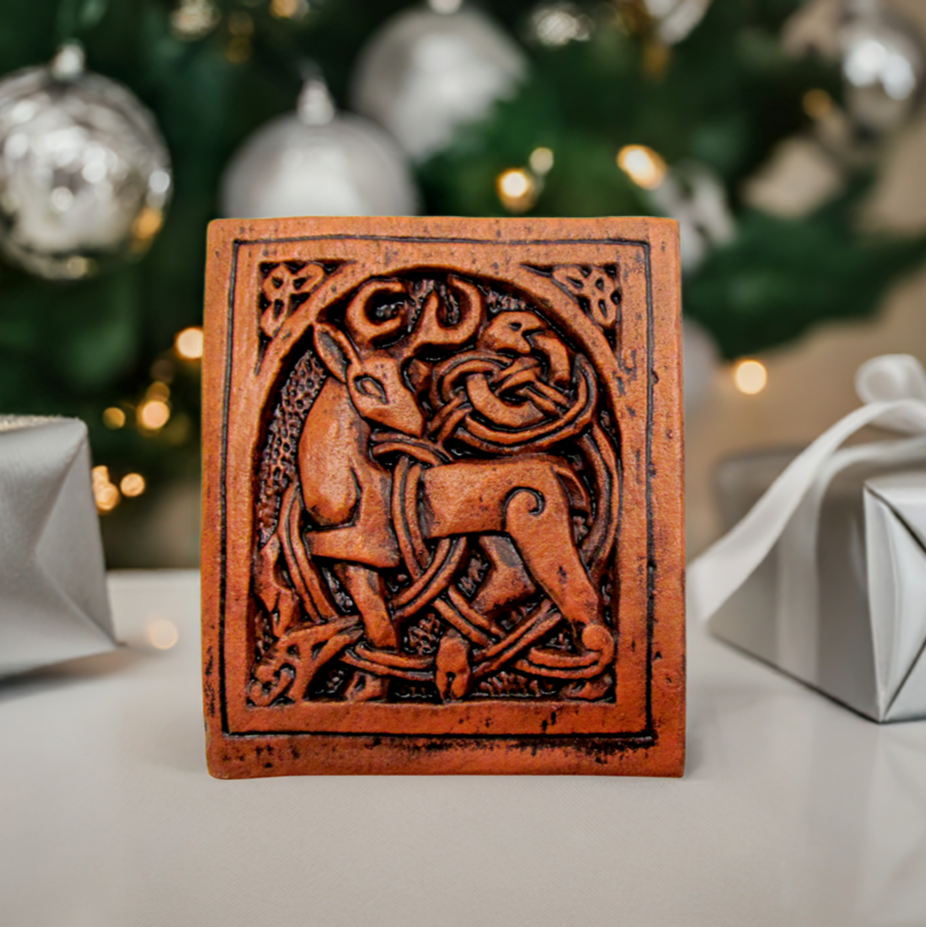
The Horned God is one of the most powerful and central archetypes in Wicca and modern Paganism. He is the untamed life force of the wilderness, the embodiment of masculine virility, the protector of the forest, and the very spirit of nature itself. While he has many forms, one of his most majestic and recognizable is that of the Stag, with his magnificent crown of antlers. This image connects him to ancient Celtic deities like Cernunnos, the Lord of the Wild Things, who sat as a benevolent king among the animals of the wood.
To place the Stag God's image on the altar at Yule is to embrace a beautiful paradox that lies at the heart of Pagan spirituality. Yule is the quietest, darkest, most introspective point of the year, a time of stillness and apparent death in the natural world. Yet, the deity who is born at this very moment is the Horned God, a symbol of potent, wild, and untamed life force. This creates a powerful and meaningful juxtaposition. Unlike a purely solar deity who might be seen as weak and infantile at his birth, the Horned God archetype brings the raw, fertile, and untamed energy of the wild into the quietest, most "civilized" indoor festival of the year.
Displaying the Stag plaque is therefore a magical act of deep understanding. It is an acknowledgment that even in the most profound moments of rest and darkness, the potent, virile life force of the universe is not absent but is present and gathering its strength. It is a powerful reminder that introspection and wildness, stillness and passion, are not opposites. They are two essential halves of the same sacred cycle. The Stag God at Yule is the promise of summer's heat contained within winter's cold, sleeping seed.
9. Skadi Pendant Necklace: Embracing the Sovereignty of Winter
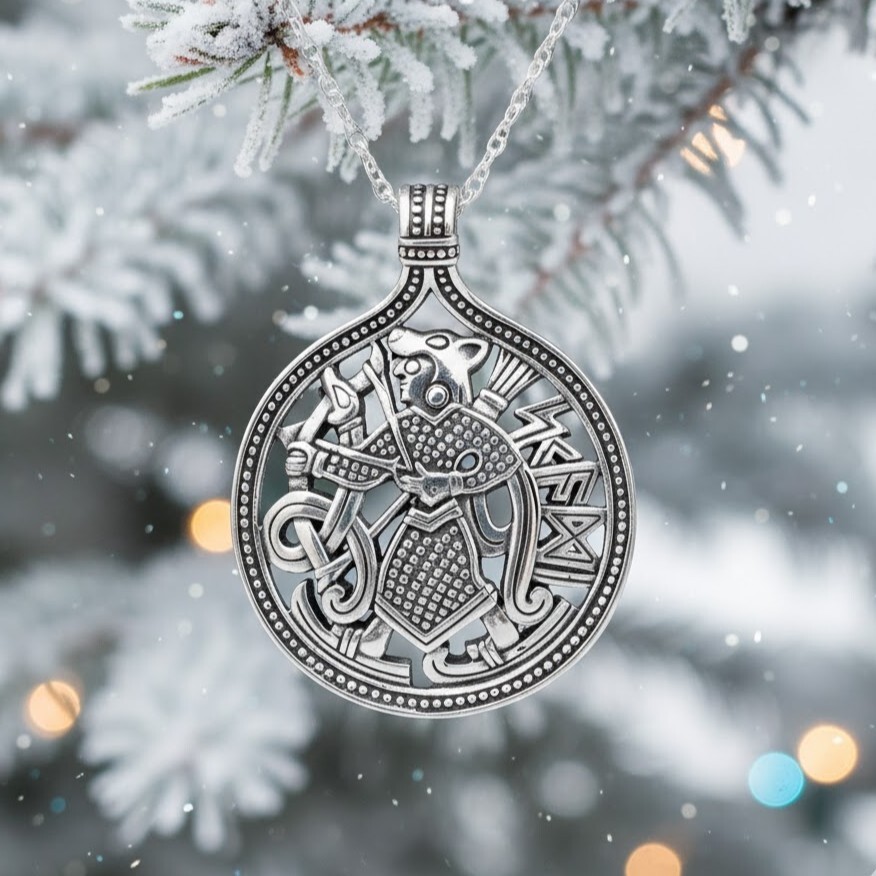
While much of the Yule narrative focuses on the rebirth of a male god and the patient waiting for the sun's return, the vast and varied tapestry of Paganism offers other, equally powerful archetypes to honor during the winter season. From the rich lore of Norse mythology comes Skadi, a formidable jötunn (giantess) and goddess who embodies the fierce, independent spirit of winter itself. She is the goddess of the high mountains where the snow never melts, a master of the skis and the bow, a huntress who thrives in the stark, frozen wilderness.
Her primary myth is one of strength and self-determination. When the gods of Asgard killed her father, Thjazi, she did not weep or wait for a champion. She donned her armor, took up her weapons, and marched to the gates of Asgard herself to demand justice. As part of her compensation, she was offered a husband from among the gods, but her marriage to the sea-god Njord was short-lived. He could not bear the howling of wolves in her mountain home, and she could not stand the cries of gulls at his seaside hall. Rather than compromise her essential nature, Skadi chose to leave the marriage and return to her own domain, the snowy peaks of Thrymheim. She is not a villain or a force of malevolence, but the powerful, sovereign queen of winter, embodying its stark beauty, its unforgiving challenges, and the profound resilience required to flourish within it.
Skadi offers a vital and empowering alternative archetype for the Yule season, especially for modern practitioners who value independence, strength, and self-sovereignty. The dominant narrative of Yule can sometimes feel like a passive state of endurance—of simply waiting for the light to come back. Skadi's story, in contrast, is one of action, agency, and conscious choice. She actively seeks justice. She chooses her own home and her own path. She is a master of her harsh environment, not a victim of it. She represents the conscious decision to embrace the darkness and the cold, rather than merely endure it, and to find one's own power and beauty within that landscape.
Gifting a Skadi pendant is an act of empowerment. It honors an alternative to the "waiting for the sun" narrative. She is a patroness for those who use the winter months as a time for strengthening their independence, honing their skills like a huntress in the woods, and finding a deep and profound beauty in the solitude and quiet power of the season. She is a reminder that one can be the sovereign ruler of their own winter landscape, strong and whole in the heart of the longest night.
10. Handmade Witches' Altar Tile from Birch Wood: The Foundation of New Beginnings
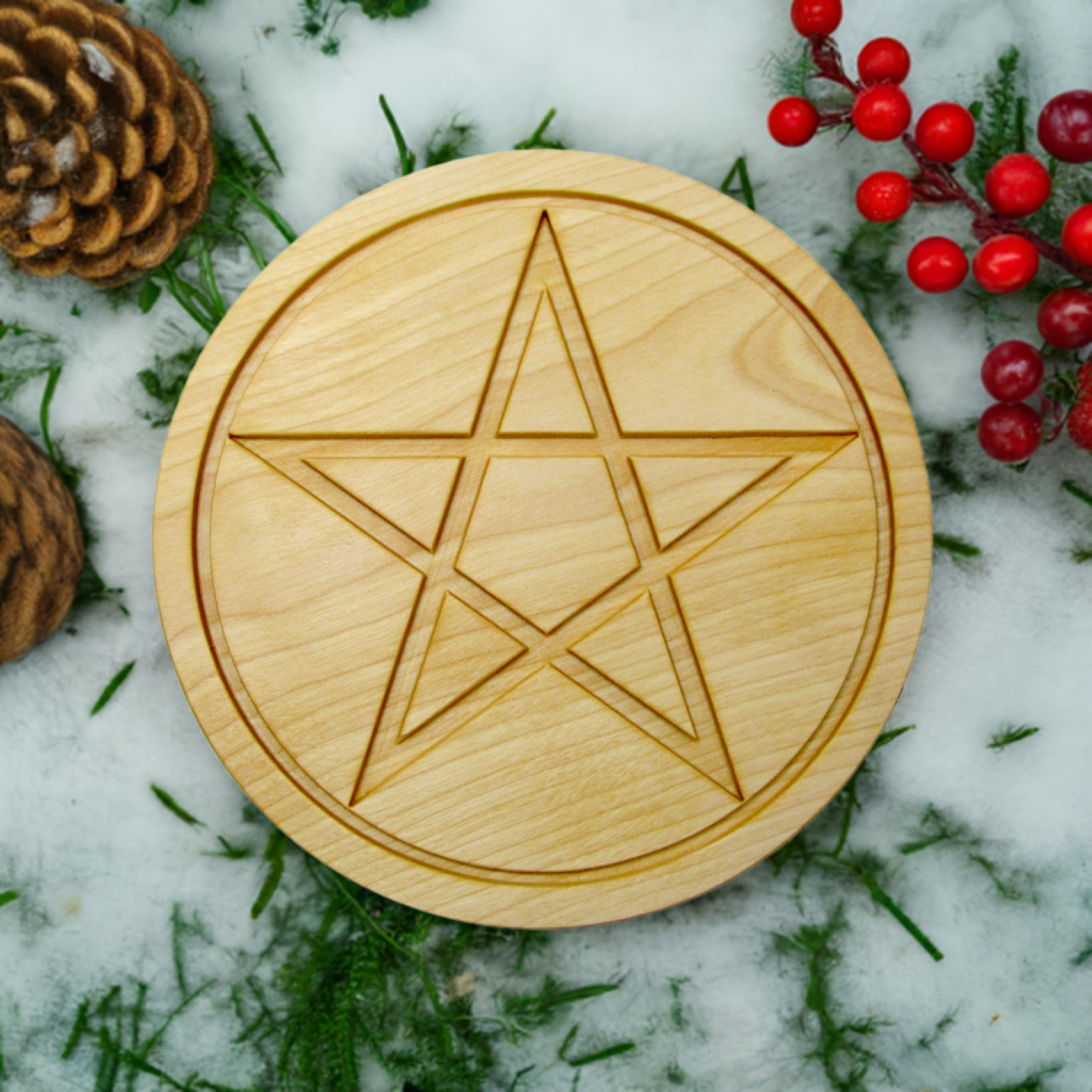
The altar tile, also known as a paten, is a fundamental tool in many Wiccan and witchcraft traditions. It is typically a flat, circular or square disc, often inscribed with a sacred symbol like the pentacle. Its primary function is to represent the element of Earth on the altar, providing a point of grounding and stability for ritual work. It serves as a focal point for concentrating energy and as a consecrated surface upon which other tools, offerings, or spell components can be placed, insulating them from the mundane surface of the altar itself.
The material from which a magical tool is made is as important as its form, and this altar tile's creation from Birch wood infuses it with a specific and potent energy perfectly suited for Yule. Birch is known as a "pioneer" tree. After a landscape has been scoured by fire or scraped clean by a receding glacier, Birch is one of the very first trees to take root and bring life back to the barren land. Because of this, its magic is intrinsically linked to renewal, purification, and new beginnings. Known affectionately as the "Lady of the Woods," it is a tree strongly associated with the Goddess and the promise of fresh starts. In folklore, a birch broom is traditionally used on the morning after the Winter Solstice to ceremonially sweep out the spirits of the old year, making way for the new.
The combination of this object and this material creates a perfect symbolic tool for Yule magic. The altar tile itself grounds the ritual in the stable, foundational element of Earth at a time of year when the physical earth outside is dormant, frozen, and seemingly lifeless. The Birch wood then infuses that grounding with the specific, vibrant energy of a brand-new beginning—the very essence of the Solstice's promise.
Using an altar tile made of Birch at Yule is therefore a highly specific and powerful magical act. It is not just a generic representation of the Earth element. It is a tool that declares: "Upon this foundation of the sleeping Earth, I invoke the spirit of the very first new beginning, the tenacious life that returns after the deepest quiet." This gift provides a foundational piece for any altar that is perfectly and beautifully attuned to the unique energetic signature of the Winter Solstice.
Weaving the Magic of Yule into Your Life
The Winter Solstice is a whisper in the dark, a sacred breath held in the heart of winter. It is a time for quiet reflection on the year that has passed and for planting the seeds of hope for the year to come. Yule reminds us that even in the most profound darkness, the spark of light and life endures, ready to be reborn.
To give a gift at Yule is to participate in an ancient and sacred tradition of sharing warmth, light, and intention. It is an act that strengthens the bonds of our chosen family and weaves a web of community to carry us through the cold months. Each of these gifts—from the fiery promise of a spell candle to the quiet strength of a Skadi figurine—is a tool for deepening one's connection to the sacred cycles of the earth. They are keys that can unlock a more profound understanding of the season's magic. May this guide inspire you to find the perfect token of affection and intention, and may your Yule be filled with warmth, wonder, and the brilliant promise of the returning light.
Visit us at Moonlight Mysteries for more unique yule gifts, gift ideas and Pagan jewelry.
Newest Guide & Blog Updates
Samhain: The Complete 2026 Guild for Witches & Pagans
A Guide to 2026 Samhain: Welcoming the Witches' New Year ☾ October 31st. All Hallows' Eve · T...
Celebrate Mabon: Witches Complete Guide to Rituals Spells and The Autumn Equinox
Celebrating Mabon: The 2026 Witch's Guide to the Autumn Equinox ☾ Mabon 2026 The wheel turns...

Trusted & Authentic Witchcraft Supplies: Moonlight Mysteries
Trusted & Authentic Witchcraft Supplies We understand. Stepping into your personal practice is...

Samhain Ritual for Ancestral Communication & Spirit Work for All Hallows' Eve
A Samhain Ritual for Spirit Work & Ancestral Communication ☾ October 31st — All Hallows' Ev...

Wiccan Supplies for Beginners – Everything You Need to Start
Magickal Supplies for BeginnersA Guide for Wicca & Spiritual Practice ☾ The sacred path of b...
Lughnasadh 2026 | Witch's Complete Guide to the First Harvest Sabbat
Lughnasadh 2026: The Complete Witch's Guide to the First Harvest Sabbat Lughnasadh falls on August...