1. What is the difference between purification and consecration?
Purification (often done with smoke cleansing, salt, or sound) strips away unwanted or lingering energies. Consecration is the vital next step: it fills that newly emptied vessel with divine light, formally dedicating the object to magical work.
2. Why doesn't this smell strong like a perfume?
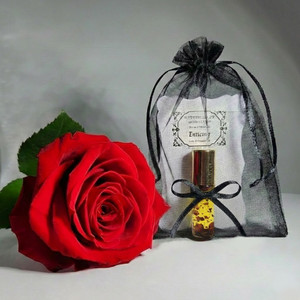
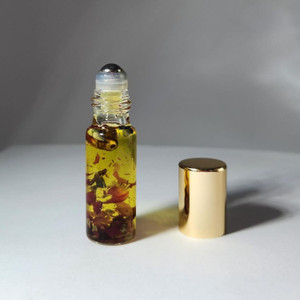
To be clear, this is a vibrationally pure anointing oil, not a commercial fragrance or perfume oil. Synthetic fragrances are designed to project a strong scent across a room. Our ritual oils are formulated purely with natural essential oils and botanicals to hold a specific energetic frequency. The scent profile is intentionally subtle so it anchors your physical body and liminal focus without overwhelming your senses during deep trance or spell work.
3. Can I use this oil to consecrate my tarot cards?
Because oil will stain and warp paper, never apply it directly to the faces of your cards. Instead, roll a tiny amount of oil onto your fingertips, rub them together until mostly absorbed, and lightly tap the outer edges of the deck, or simply anoint the box they are stored in.
4. What does "Blessed Be" mean in Wicca?
While often used as a greeting or farewell, "Blessed Be" originates from the formal Wiccan Fivefold Kiss, a ritual greeting that blesses the feet, knees, womb/phallus, breasts/chest, and lips. It is a profound acknowledgment of the divine spirit residing within the practitioner.
5. Can I use this oil on my skin?
Yes, this oil is safely diluted in a premium, skin-safe Jojoba carrier oil specifically for topical pulse-point anointing. However, it is formulated as a ritual tool, not a cosmetic, and we always recommend doing a small patch test first.
6. How often should I consecrate my altar tools?
Tools should always be cleansed and consecrated when you first acquire them. After that, they only need to be re-consecrated if they have been handled by someone else, used for heavy banishing work, or if their energy feels flat or disconnected.